
tertiary rehabilitation hospital


16
2015
-
10
How important is it to master cardiopulmonary resuscitation (CPR)?


“That female patient nearly died—her husband was the one who saved her; I heard he performed CPR on her,” patients’ family members murmured in the corridor of Ward 204 at Zijin Hospital.
The incident dates back to August 26, 2015, when Ms. Chen, who was working at the Nanjing Nursery Base, suddenly collapsed and lost consciousness. Her husband and colleagues immediately initiated chest compressions and rescue breathing; after sustaining these efforts for 30 minutes, an ambulance from the 120 emergency service arrived. Medical personnel continued cardiopulmonary resuscitation, and following defibrillation, endotracheal intubation, and pharmacologic treatment at the hospital, her consciousness gradually returned. Seventeen days later, she was transferred to our hospital for rehabilitation therapy.
Once cardiac arrest occurs, if immediate and timely resuscitation is not administered, brain and other vital organs will suffer damage within 4 to 6 minutes, and irreversible injury (brain death) will ensue after 10 minutes. Therefore, cardiopulmonary resuscitation (CPR) must be initiated promptly at the scene.
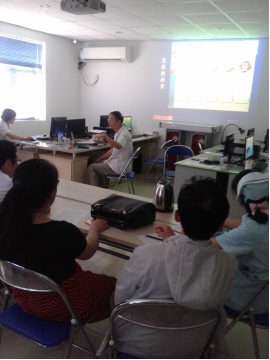
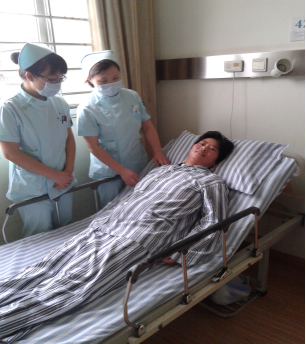
Starting on September 18, the hospital’s medical staff participated in a cardiopulmonary resuscitation (CPR) training session led by Director Xie Kangmin. The lecture was delivered in two parts, covering both theoretical concepts and practical demonstrations. Using PPT presentations and video clips, the content was presented in a clear, accessible manner that was easy to follow. As a result of this training, healthcare professionals have heightened their awareness of CPR and strengthened their emergency‑response skills.
A male patient from Ward 204 was admitted to our hospital due to a spinal cord injury. On October 2, while receiving an intravenous infusion of 30 mL of reduced‑form glutathione sodium, he developed an allergic reaction and suffered cardiac arrest. Following the nurse’s report to the physician, resuscitative measures were initiated. The on‑call physicians, Gao Jirong and Wang Guoxing, immediately commenced cardiopulmonary resuscitation. Through the concerted efforts of the medical team, the patient regained a heart rate and blood pressure within five minutes, and the resuscitation was successful.
Whether you are a healthcare professional or an ordinary citizen, learning and mastering cardiopulmonary resuscitation (CPR) is of paramount importance.
Related Content
WeChat Official Account
WeChat Channel
Copyrights©2024 nanjing zijin hospital website construction:China Enterprise Power Nanjing
Note: All information on this site is for reference only and cannot represent the doctor's diagnosis and treatment.
Do not copy and reprint without authorization