
tertiary rehabilitation hospital


21
2019
-
06
Our hospital successfully conducted an emergency drill for the hyperbaric oxygen chamber.
On the afternoon of June 21, Nanjing Zijin Hospital conducted its second-quarter 2019 emergency drill for the hyperbaric oxygen chamber at the Hyperbaric Oxygen Therapy Center in the Jiangning Ward.

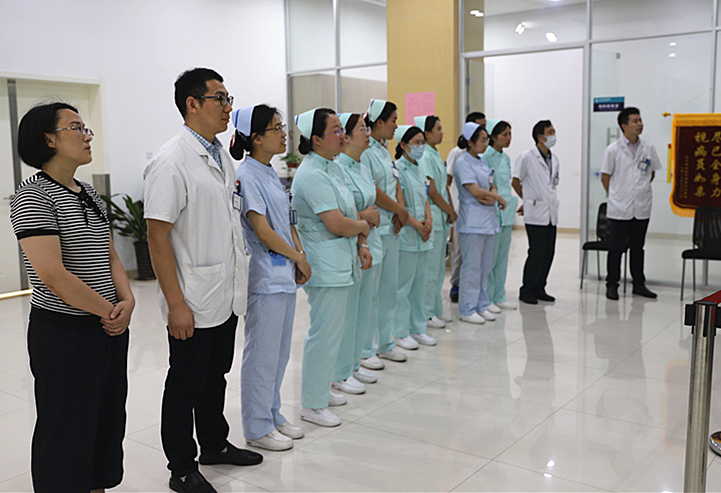
This exercise assumes that, during hyperbaric oxygen therapy, a fire suddenly breaks out on one side of the chamber. Staff immediately implement emergency procedures to extinguish the fire and ensure the safety of personnel inside the chamber.
At 15:35, the exercise commenced. Some of the participating staff members—playing the roles of patients, their family members, and onboard physicians and nurses—entered the chamber. The primary and secondary operators, seated at the hyperbaric oxygen therapy console, initiated pressurization in accordance with standard treatment protocols. Five minutes later, a fire suddenly broke out on one side of the chamber, triggering panic among the patient’s relatives, who began shouting for help and pounding on the chamber walls, plunging the scene into chaos.
The primary and secondary operators immediately took separate actions: they separately instructed the patient to stop oxygen administration, remove the face mask, shut down and restart the relevant equipment, activate the water-spray fire‑extinguishing system, disconnect the main power supply, and initiate emergency pressure relief.

The operator immediately notified the on‑call hospital administrator by phone, who promptly assembled the on‑duty physicians and nurses, instructing them to bring emergency equipment to the hyperbaric chamber to coordinate patient resuscitation and handle subsequent matters. At the same time, voice prompts over the intercom guided family members in self‑rescue efforts, providing information on the location and proper use of fire extinguishers.
Following decompression of the hyperbaric chamber, staff promptly opened the hatch and systematically transferred the occupants to the ward for further examination and treatment. Subsequently, related follow-up procedures were initiated in succession.
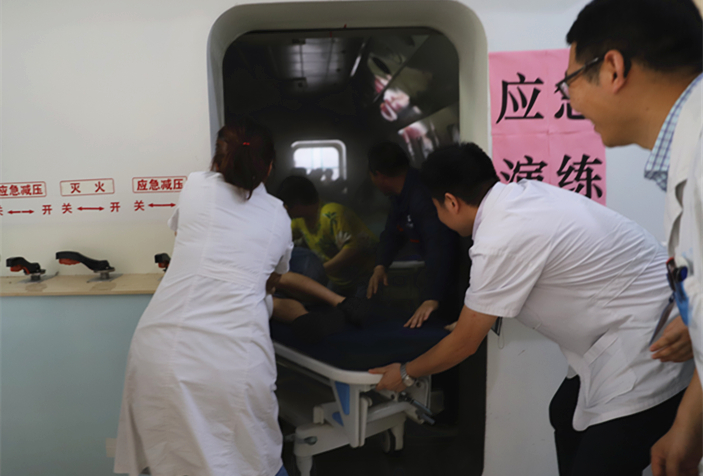

The exercise lasted approximately one hour and successfully accomplished all the planned objectives and tasks. Deputy Director of Operations Gao Zhiqiang convened the responsible officials from the key participating departments to review the exercise, summarizing both its successes and areas for improvement.

To enhance the emergency response capabilities of oxygen‑chamber operators and clinical staff, our hospital mandates that this emergency procedure be practiced at least once per quarter, with all operators required to participate, ensuring that any unforeseen incidents can be managed in a rational and orderly manner.
Related Content
WeChat Official Account
WeChat Channel
Copyrights©2024 nanjing zijin hospital website construction:China Enterprise Power Nanjing
Note: All information on this site is for reference only and cannot represent the doctor's diagnosis and treatment.
Do not copy and reprint without authorization